SmartRCFATM

RCFA Management for structured defect elimination

SmartRCFA helps teams manage Root Cause Failure Analysis workflows so investigations, causal findings, and corrective actions are kept visible from initiation through verified closure.

SmartRCFA RCFA Management

Built for repeatable investigation and learning

Defect elimination only works when investigations move beyond symptoms. SmartRCFA helps teams capture events, investigate causes, assign corrective actions, and retain the learning needed to reduce repeat failures.

Structured investigations

Keep the event record, evidence, and analysis steps together in one workflow.

Corrective follow-through

Track actions and owners so recommended fixes do not stall after the analysis.

Learning retention

Keep findings accessible for future review and prevention work.

What teams can manage in SmartRCFA

  • Failure event captureRegister incidents, defects, and equipment failures with the right context and supporting information.
  • Cause analysis supportDocument investigation logic and findings in a controlled way.
  • Action managementAssign corrective and preventive actions with due dates and accountability.
  • Evidence handlingAttach the records needed to support conclusions and recommendations.
  • Defect elimination focusSupport teams working to reduce recurring failure patterns and operational losses.
  • Cross-functional participationBring operations, maintenance, engineering, and reliability teams into the same review process.
  • Closure verificationConfirm whether the agreed actions have actually been completed and accepted.
  • Traceable findingsRetain the analysis record for future audits and lessons learned.

Typical delivery flow

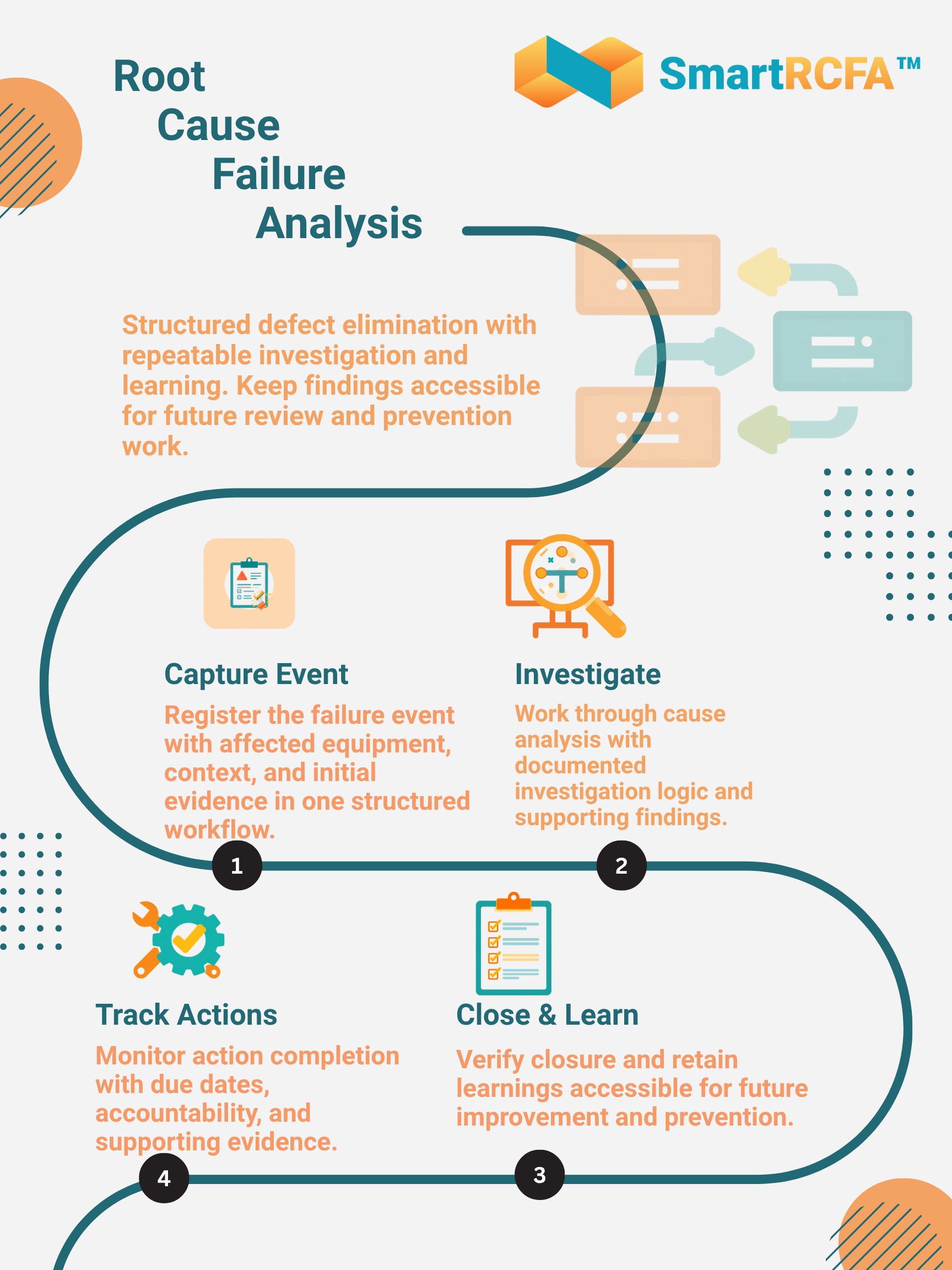
The workflow can be aligned to your process while keeping the information structured, visible, and easier to review at each stage.

  1. 1. Capture the failure eventRegister the issue, affected equipment or process, and initial evidence.
  2. 2. Investigate the causesWork through the analysis and document supporting findings.
  3. 3. Define corrective actionsTranslate the findings into owned defect-elimination actions.
  4. 4. Track implementationMonitor action completion and supporting evidence.
  5. 5. Close and retain learningVerify closure and keep the record available for future improvement.

Get a quote

Share the basic scope and timeline and we will respond with pricing and rollout options.

Need a closer look at how SmartRCFA would fit your workflow?

We can walk through your process, reporting needs, and data structure and show how the workflow can be configured around them.